
Attending a Vietnamese wedding is a beautiful experience, rich in culture and tradition. Understanding the Vietnamese wedding dress code is crucial for guests and participants alike to show respect and celebrate appropriately. This guide will help you navigate the nuances of attire for these joyous occasions, ensuring you are dressed perfectly for the celebration.
Understanding the Traditional Vietnamese Wedding Dress Code
Traditional Vietnamese weddings are deeply rooted in cultural customs, and the attire reflects this heritage. While modern influences have introduced some flexibility, the core principles of respect, elegance, and cultural significance remain. The traditional Vietnamese wedding dress code often involves specific garments for the bride, groom, and sometimes even the wedding party.
The Ao Dai for the Bride
The most iconic symbol of Vietnamese bridal wear is the Ao Dai. This elegant, form-fitting tunic worn over loose trousers is typically made from luxurious fabrics like silk or satin, often adorned with intricate embroidery, beads, or lace. Brides traditionally wear a red Ao Dai, symbolizing luck and happiness, though white and other pastel colors are also popular. The Ao Dai is worn during various ceremonies, including the engagement ceremony (Dam Hoi) and the tea ceremony (Le Ruoc Dau).
Groom’s Traditional Attire
For the groom, traditional attire often complements the bride’s Ao Dai. He might wear a matching Ao Dai for men, though it is typically simpler in design. Alternatively, a formal suit in a dark color is a common choice, particularly for the reception. The traditional Vietnamese wedding dress code for the groom emphasizes dignity and respect.
Guest Attire Guidelines for a Vietnamese Wedding Dress Code
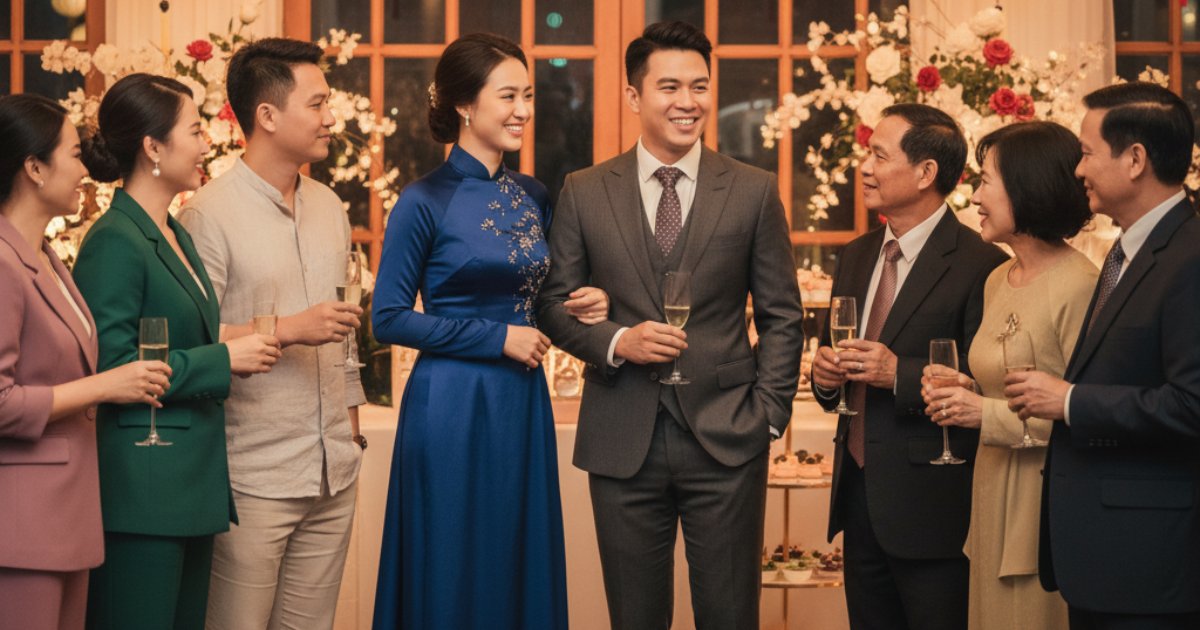
When invited to a Vietnamese wedding, guests are expected to dress respectfully and elegantly. The general rule is to opt for formal or semi-formal attire. While there isn’t a single strict Vietnamese wedding dress code for guests, certain considerations will ensure you are appropriately dressed.
Colors to Consider and Avoid
Bright and vibrant colors are generally welcomed, as they reflect the celebratory nature of the event. Gold, red, and other rich hues are popular choices. However, it is advisable to avoid wearing pure white or black. White is traditionally reserved for the bride, and black can sometimes be associated with mourning, although this perception is becoming less strict in modern contexts. It is always safe to choose colors that are festive and cheerful.
Appropriate Styles for Guests
For women, elegant dresses, skirts, or formal pantsuits are suitable. Shoulders should generally be covered, especially during temple visits or more traditional ceremonies. For men, a suit and tie or a dress shirt with formal trousers are appropriate. The key is to look polished and well-groomed. Comfort is also important, as Vietnamese weddings often involve long celebrations and various activities.
The Bride’s and Groom’s Attire in a Vietnamese Wedding
Beyond the traditional Ao Dai, Vietnamese brides and grooms often have multiple outfit changes throughout their wedding day. This allows them to honor tradition while also embracing modern styles. Understanding these changes is key to appreciating the full scope of a Vietnamese wedding dress code.
Multiple Outfits for the Bride
A Vietnamese bride typically wears several outfits. She might start with a traditional red Ao Dai for the engagement and tea ceremonies, followed by a white Western-style wedding gown for the church ceremony (if applicable) and the reception. Sometimes, a third, more contemporary evening gown is worn for the latter part of the reception, allowing for more movement and dancing. Each outfit change signifies a different stage of the celebration.
Groom’s Complementary Attire
The groom’s attire also changes to match the bride’s. He will typically wear a men’s Ao Dai or a formal suit during the traditional ceremonies. When the bride changes into her white gown, the groom will usually wear a tuxedo or a dark formal suit. His outfits are chosen to complement the bride’s elegance, maintaining a cohesive look throughout the entire Vietnamese wedding dress code progression.
Modern Adaptations of the Vietnamese Wedding Dress Code
While tradition remains strong, contemporary Vietnamese weddings often blend cultural customs with global trends. This has led to more flexibility in the Vietnamese wedding dress code, especially for guests and even for the bridal couple themselves.
Casualization and Personalization
Some couples opt for a more relaxed dress code, particularly for outdoor or destination weddings. It is not uncommon to see guests in smart casual attire, especially if specified on the invitation. Brides are also increasingly personalizing their Ao Dai with unique designs, colors, and modern silhouettes, moving beyond strictly traditional styles. This evolution reflects a desire to honor heritage while embracing individual tastes.
Influence of Western Wedding Styles
Western wedding traditions, including the white wedding dress and formal suits, have become integral to many Vietnamese weddings. This means guests might encounter a dress code similar to Western weddings, where cocktail attire or black-tie optional is expected. Always refer to the invitation for specific instructions, as it will provide the best guidance on the expected Vietnamese wedding dress code.
Essential Etiquette Beyond the Vietnamese Wedding Dress Code
Beyond what you wear, understanding general wedding etiquette is crucial for showing respect and ensuring you are a gracious guest at a Vietnamese wedding. These practices complement the attire guidelines and enhance your overall experience.
Gift Giving Customs
Monetary gifts, known as “li xi” (lucky money), are customary and preferred. These are typically presented in a red envelope at the reception. The amount should reflect your relationship with the couple and your financial comfort. Physical gifts are less common but can be appropriate if they are meaningful and practical for the couple’s new life together. This tradition is an important aspect of attending a Vietnamese wedding.
Participation and Respectful Behavior
Be prepared to participate in various activities, including toasts, games, and dancing. Showing enthusiasm and joy is highly appreciated. Always be respectful of elders and family members, and follow the lead of the wedding party. A polite and cheerful demeanor is always the best accessory to any Vietnamese wedding dress code.
Contact Cees Bridal
Cees Bridal is dedicated to creating exquisite bridal wear. For inquiries or custom designs, please reach out to us:
- Hotline/Zalo: +84 378 220 630
- Website: ceesbridal.com
- Fanpage: Cees Bridal Facebook
- Address: 16/8 Dang Van Ngu, Phu Nhuan District, Ho Chi Minh City, Vietnam
Custom Wedding Dress Design At CeesBridal is a professional service for brides who want a unique and perfectly fitted gown. CeesBridal specializes in Vietnamese bridal fashion, offering elegant and detailed dresses for both local and international customers.
